
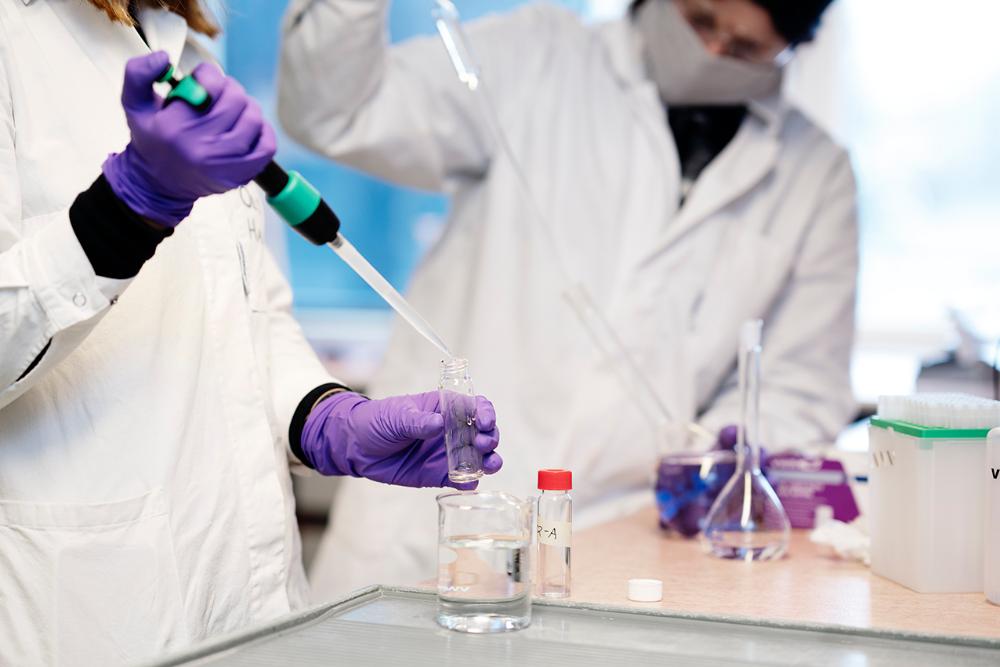
Water quality analysis is a crucial aspect of environmental science, public health, and industrial applications. Laboratories dedicated to this field continuously seek innovative methods to enhance accuracy, efficiency, and reliability in their testing processes. The implementation of cutting-edge techniques in water analysis not only ensures compliance with regulatory standards but also paves the way for sustainable environmental practices. By incorporating advanced technology and methodologies, modern labs can provide comprehensive insights into water quality, helping to safeguard ecosystems and human health.
Advanced Spectroscopy Techniques
Spectroscopy has revolutionized water analysis by allowing for the detection of a wide range of contaminants at trace levels. Current advancements in this field include:
- Raman Spectroscopy: Highly sensitive to molecular vibrations, making it ideal for identifying organic compounds and pollutants.
- Fourier Transform Infrared (FTIR) Spectroscopy: Provides detailed molecular fingerprinting of complex mixtures, aiding in the identification of both organic and inorganic substances.
- Ultraviolet-Visible (UV-Vis) Spectroscopy: Utilized for quantifying metal ions and organic molecules in water samples.
For a deeper understanding of these techniques and their applications, discover expert strategies here.
Chromatography Innovations
Chromatography is a cornerstone of analytical chemistry, essential for separating and analyzing complex mixtures. Recent innovations include:
- High-Performance Liquid Chromatography (HPLC): Offers high resolution and rapid analysis, critical for measuring pesticides and pharmaceuticals.
- Ion Chromatography (IC): A powerful tool for detecting inorganic anions and cations, vital for assessing water quality.
- Gas Chromatography-Mass Spectrometry (GC-MS): Combines separation and identification capabilities, particularly effective for volatile and semi-volatile organic compounds.
Learn about our tailored solutions to enhance water analysis using these chromatographic methods.
Innovative Sensor Technologies
The integration of sensor technologies into water analysis provides real-time data and enhances monitoring capabilities. Key developments include:
- Electrochemical Sensors: Ideal for detecting heavy metals and nutrient levels due to their sensitivity and selectivity.
- Optical Sensors: Used for monitoring turbidity and colorimetry, crucial for assessing water clarity and quality.
- Biochemical Sensors: Employ biological recognition elements to detect specific pollutants, offering a high degree of specificity.
To explore advanced guides and tips on employing these technologies, find out more about this approach.
Data Analytics and Modeling
The application of data analytics and modeling in water analysis has transformed the way results are interpreted and utilized. With the aid of sophisticated algorithms and software, labs can:
- Predict contamination trends and potential risks.
- Optimize water treatment processes through simulation and modeling.
- Enhance decision-making with comprehensive data visualization tools.
For further insights on integrating data analytics into water analysis, explore advanced guides and tips.
Conclusion
As the demand for precise, reliable water analysis grows, laboratories are continually adapting and expanding their technological capabilities. By adopting cutting-edge techniques such as advanced spectroscopy, chromatography innovations, and sensor technologies, labs can provide unparalleled water quality assessments. These advancements not only fulfill regulatory requirements but also contribute significantly to environmental stewardship and public health. Laboratories that embrace these technologies position themselves at the forefront of scientific research and industrial application, ensuring a cleaner, safer world for future generations.