
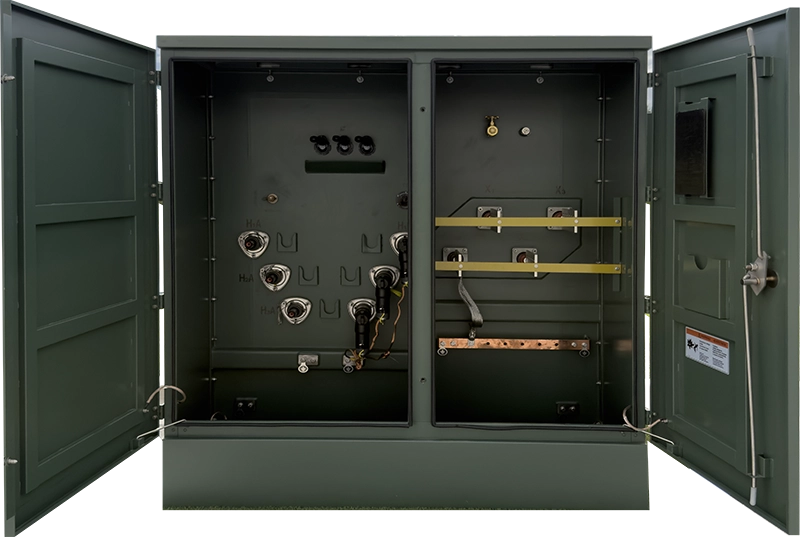
Choosing the right 5000″?kVA transformer is a critical decision for any facility that demands reliable, high-capacity power distribution. A transformer of this size must balance efficiency, durability, and cost while fitting the specific load profile and environmental constraints of the installation site. This guide walks through the essential criteria, technical considerations, and practical steps that help engineers and procurement specialists maximize efficiency and achieve long-term operational savings.
Understanding Core Efficiency Factors
Before diving into product specifications, it is important to grasp the primary elements that influence a transformer’s efficiency:
- Core Material and Design: High-grade silicon steel or amorphous alloys reduce hysteresis and eddy-current losses.
- Winding Configuration: Optimized copper or aluminum conductors, along with appropriate turn ratios, minimize resistive losses.
- Cooling Method: Oil-immersed, pad-mount units provide consistent thermal management, especially in outdoor or semi-outdoor settings.
- Load Profile: Matching the transformer’s rating to the actual peak and average loads prevents over-loading and unnecessary idle losses.
Key Selection Criteria
1. Load Requirements and Future Expansion
Accurately estimating current and future demand prevents both undersizing and oversizing. Conduct a load study that includes:
- Maximum demand (kW) and diversity factor.
- Harmonic distortion levels from non-linear loads.
- Projected growth over the next 5-10 years.
When the analysis shows a consistent need near 5000″?kVA, a 5000 kva transformer becomes the logical choice, offering a balance between capacity and efficiency.
2. Efficiency Ratings and Losses
Look for transformers that meet or exceed IEC 60076-2 efficiency classes (e.g., IE3 or IE4). Key metrics include:
- Core (no-load) loss – measured in watts at rated voltage.
- Load loss – varies with load percentage; lower percentages indicate better performance under partial load.
- Combined loss at 50″?% and 100″?% load – useful for calculating annual energy cost.
Choosing a unit with lower combined losses can reduce operating expenses by up to 15″?% over a decade, especially in facilities with variable load patterns.
3. Temperature Rise and Cooling Capacity
Oil-immersed pad-mount transformers rely on natural convection and radiative cooling. Verify that the design maintains temperature rise within 55″???C (or the manufacturer’s specification) under worst-case ambient conditions. Excessive temperature accelerates insulation aging, shortening service life.
4. Compliance and Standards
Ensure the equipment complies with relevant standards such as:
- IEC 60076 series (general requirements, testing, and safety).
- IEEE C57.12 for American markets.
- Local grid interconnection rules and environmental regulations.
Evaluating Technical Documentation
Thorough review of the 5000 kva transformer specification sheet is essential. Key sections to scrutinize include:
- Electrical Data: Rated voltage, impedance, short-circuit rating, and tolerance.
- Mechanical Data: Dimensions, weight, mounting requirements, and transportation limits.
- Insulation Class: Class”?B, F, or H – higher classes tolerate higher temperatures.
- Noise Level: Measured in dB(A); important for installations near occupied spaces.
Cross-reference these details with project specifications to confirm fit-for-purpose performance.
Cost Considerations and ROI
While the upfront expense is a visible factor, a holistic view of total cost of ownership (TCO) yields better decision-making. Include:
- Initial purchase price – often referenced as 5000 kva transformer price.
- Installation and commissioning costs.
- Annual energy loss cost calculated from efficiency data.
- Maintenance schedule and expected downtime.
- Projected lifespan based on temperature and load cycles.
Perform a simple payback analysis: divide the annual energy savings by the price premium of a higher-efficiency unit. If the payback period is under five years, the investment is typically justified.
Installation Best Practices
Site Preparation
- Ensure a level, vibration-isolated pad with adequate drainage.
- Provide clearances for ventilation, access, and future maintenance.
- Install grounding according to local electrical codes.
Commissioning Checklist
- Verify oil level and quality; perform oil testing for dielectric strength.
- Conduct insulation resistance and turns-ratio tests.
- Load the transformer gradually to monitor temperature rise and voltage regulation.
- Document all readings for future baseline comparisons.
Maintenance Strategies for Long-Term Efficiency
Regular maintenance preserves efficiency and extends service life. Recommended practices include:
- Quarterly oil sampling and moisture analysis.
- Annual visual inspection of bushings, connections, and cooling fins.
- Thermographic scanning to detect hot spots.
- Prompt replacement of degraded gaskets or seals.
Implementing a predictive maintenance program, supported by condition-monitoring sensors, can further reduce unexpected outages.
Conclusion
Selecting the appropriate 5000″?kVA transformer involves a blend of technical evaluation, cost analysis, and strategic planning. By focusing on core efficiency factors, matching the unit to precise load requirements, scrutinizing specifications, and adopting disciplined installation and maintenance practices, facilities can achieve optimal performance while minimizing operational expenses. The right transformer not only powers today’s demands but also provides a scalable, reliable foundation for future growth.